
Running a Sex Offender Check in Orange County
The New York State Sex Offender Registry is the official first stop for Orange County sex offender records. The Division of Criminal Justice Services, or DCJS, maintains it under Correction Law Article 6-C. A judge assigns Level 1, Level 2, or Level 3 after a risk-level hearing. That level controls public access. The online directory shows Levels 2 and 3, while the registry telephone service can check all levels when a caller supplies enough exact identifying information.
Orange County does not publish a separate sheriff map or local public directory in the researched official channels. Use the state directory for public profiles, the toll-free registry line for a Level 1 inquiry, and the Orange County Sheriff for local registration or suspected compliance issues. This division matters. A no-result online search does not rule out a Level 1 registration, a record withheld under the registry's historic limits, or a person registered in another state.
The official New York registry overview shows how DCJS separates search, alert, and contact channels.
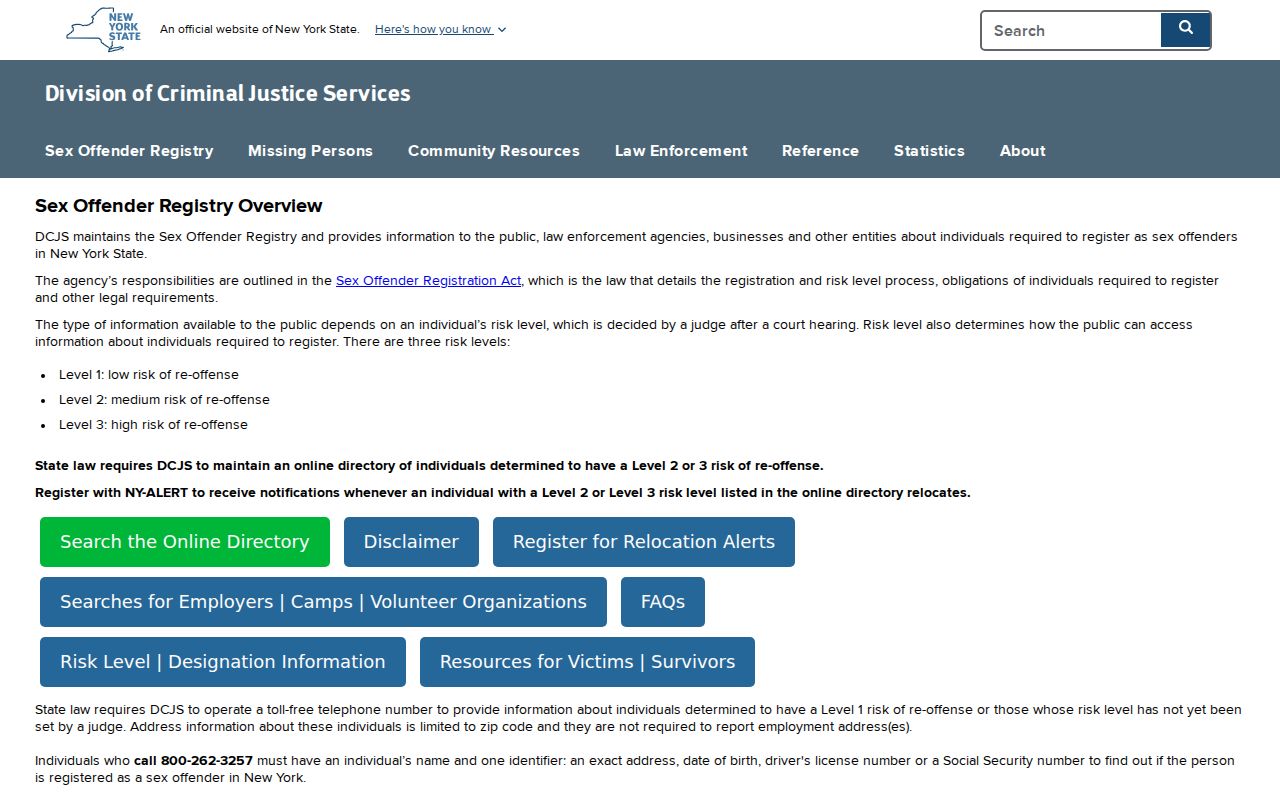
That state source is the point to verify an Orange County registry entry and the current terms governing its release.
Orange County Level 1 Phone Checks
An Orange County Level 1 registration is low risk under New York's system, but it is not displayed in the online directory. Call the registry at 800-262-3257. The caller must provide a full name plus one exact identifier: an address, complete date of birth, driver-license number, or Social Security number. The line is a distinct public-access channel, not mere technical support for the website.
An Orange County caller should prepare the identifying fact before calling. A partial name or rough age does not match the stated verification route. For registry staff questions, DCJS also publishes 518-417-3384 and SORRequests@dcjs.ny.gov, weekdays from 8 a.m. to 4 p.m. The mailing office is the DCJS Sex Offender Registry, 80 South Swan Street, 10th Floor, Albany, NY 12210. Do not send highly sensitive identifiers by an unapproved channel; use the method registry staff directs.
Note: An empty Orange County online result cannot exclude a Level 1 record because that level is available through the phone verification channel.
Searching the New York State Sex Offender Registry
The public Level 2 and Level 3 directory supports name and place-based searches. Select Orange in the county field to review public entries tied to Orange County. A ZIP search can narrow a community, while a surname search helps confirm a known name. The official form does not promise a street-address radius control, so do not treat a county or ZIP result as a measured distance from a home, school, or park.
- Open the DCJS directory and read the conditions governing use of registry information.
- Choose a mode: enter a last name, select Orange County, or provide a five-digit ZIP code.
- Use first name only to narrow a name search, then compare more than one profile fact before deciding that a result matches.
- Open the profile and review level, offense, address detail, vehicle information, and compliance status in context.
| Field Label | Type | Required | Notes |
|---|---|---|---|
| Last Name | Text | Name mode | Spelling-based search |
| First Name | Text | No | Narrows a name search |
| County | Dropdown | Geographic mode | Select Orange for county results |
| ZIP Code | Text | Geographic mode | Use a five-digit ZIP |
| Search / Clear | Buttons | No | Run or reset the form |
The official directory interface displays the fields used for Orange County Level 2 and Level 3 searches.
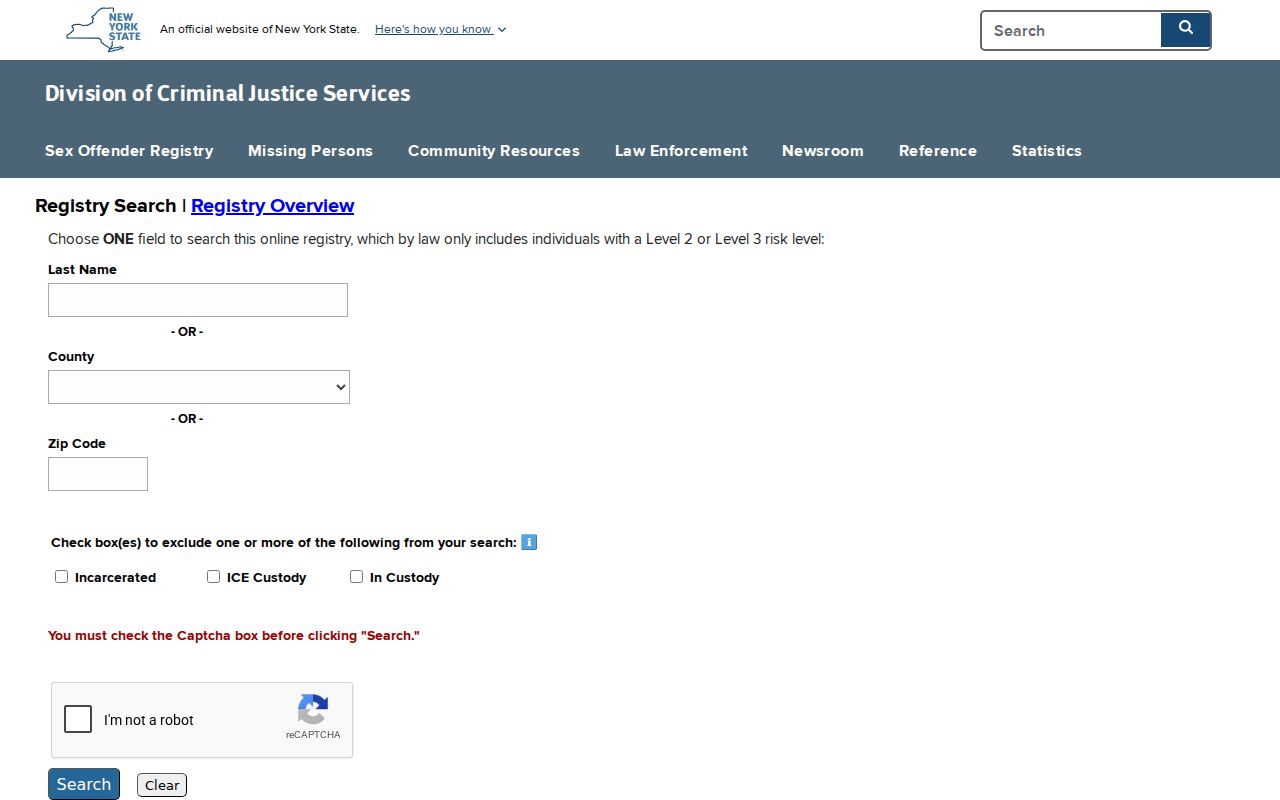
The Orange County form makes the access boundary visible: name, county, and ZIP are available, but a general online Level 1 search is not.
Orange County Registry Relocation Alerts
NY-ALERT adds notice after the initial Orange County sex offender search. DCJS says residents may subscribe for relocation notices when a listed Level 2 or Level 3 registrant moves. An alert is useful for ongoing community awareness because a saved one-time result can grow stale when an address changes. It does not expand which risk levels are public online, and it should not replace the Level 1 phone channel.
Use alerts as a prompt to reopen the official profile. Check the risk level, address detail, current photo when available, and compliance status again. Do not assume that the wording of an email supplies facts that the registry profile does not. Orange County residents who believe a registration duty is not being followed can contact the Orange County Sheriff at 845-862-6399. Call 911 only when there is an emergency, not for a routine record question.
What a Registry Profile Shows
An Orange County public profile collects identification, classification, and registration facts. DCJS may show several photographs, aliases, physical traits, a risk level, and a special designation. It can also identify the registerable crime, conviction date and place, residence information at the level authorized for release, and an employment address for Levels 2 or 3 where required. Vehicle details and compliance information help distinguish people with similar names.
| Name & Aliases | Public name and known aliases used to distinguish the record. |
|---|---|
| Photo & Description | Available photographs plus sex and physical descriptors. |
| Address Information | Current or prior residence details at the legally authorized level. |
| Registerable Crime | Current or prior registerable offense, conviction date, and jurisdiction. |
| Level & Designation | Risk level and any predator, sexually violent offender, or predicate designation. |
| Vehicle & Status | Make, model, plate, registration status, and relevant supervision terms when shown. |
A profile is not a complete Orange County court file. It does not replace the conviction judgment, sentence, or later court orders. Certain older classifications affected by federal litigation may also be excluded from online release. Read the listed crime and status as registry facts, then use the originating court if a certified disposition is needed.
Cross-State Orange County Registry Searches
The National Sex Offender Public Website, or NSOPW, is the better extra layer when a personal-safety search crosses New York's borders. Its name and location tools query participating public registries. That helps in a region where travel can extend beyond Orange County, but NSOPW does not turn state records into one uniform national profile. Each participating jurisdiction sets what it releases.
Start with NSOPW for the broad sweep, then confirm a New York result in the DCJS directory. Use the state source to read New York's risk level, designation, and access limits. A national no-result should not be taken as proof that no registration exists, since public display rules and data timing vary. The federal NSOPW search page illustrates this cross-jurisdiction search layer.
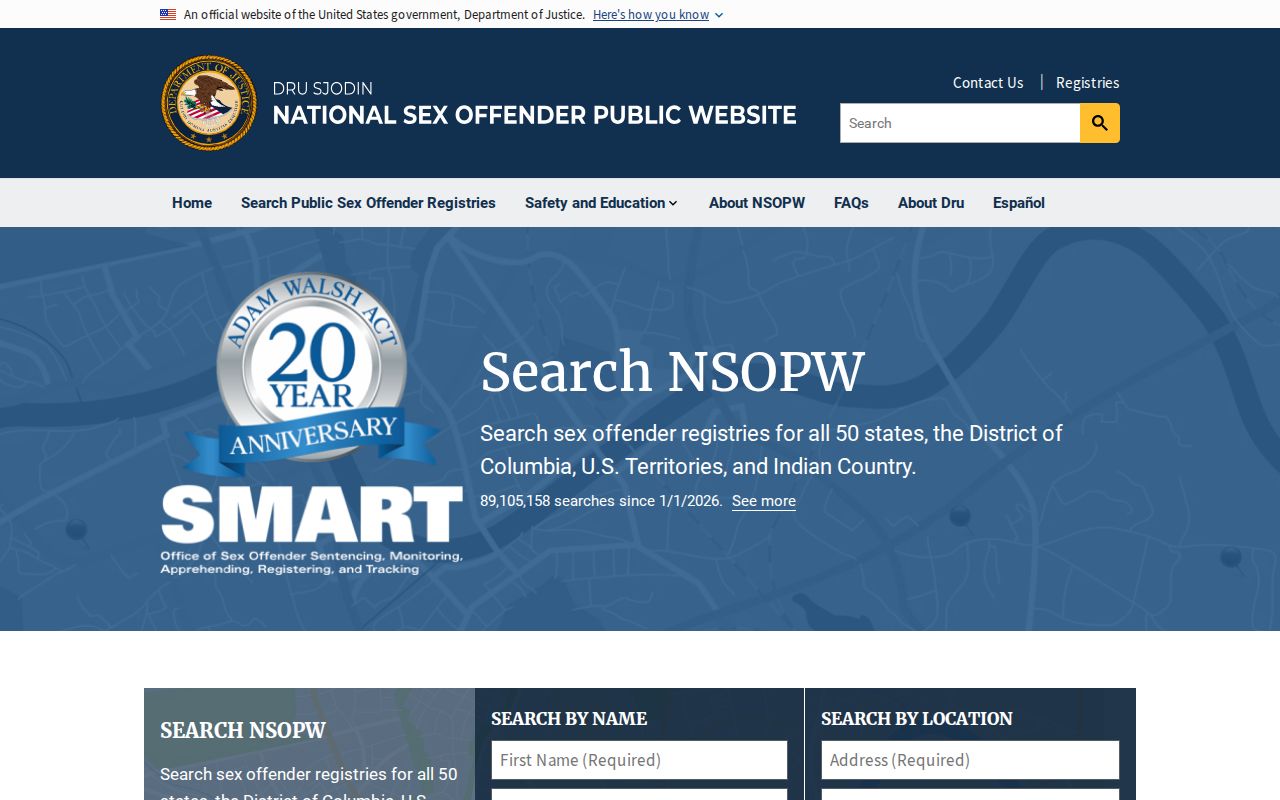
The national tool is most useful as a bridge between official state sources, not as a substitute for the Orange County result shown by DCJS.
Registration Requirements and Levels in New York
Orange County searches use New York's judicial risk levels rather than federal SORNA tiers. Level 1 means low risk, Level 2 medium risk, and Level 3 high risk. Duration does not rest on the number alone. The registration date, statutory amendments, and a special designation can change the term. The official SORA history should control instead of a simplified federal tier chart.
| Classification | Public Access | Duration and Verification |
|---|---|---|
| Level 1 | Phone verification; not in online directory | Generally 20 years under post-2006 rules unless a lifetime rule applies; annual verification |
| Level 2 | Online and phone | Generally life; an eligible person without a designation may seek relief after 30 years; annual verification |
| Level 3 | Online and phone, with broader notice | Life; address verification every 90 days |
| Special designation | Displayed where public | Lifetime registration regardless of the ordinary level rule |
The official registry levels and requirements page explains the risk system and how the law changed over time.
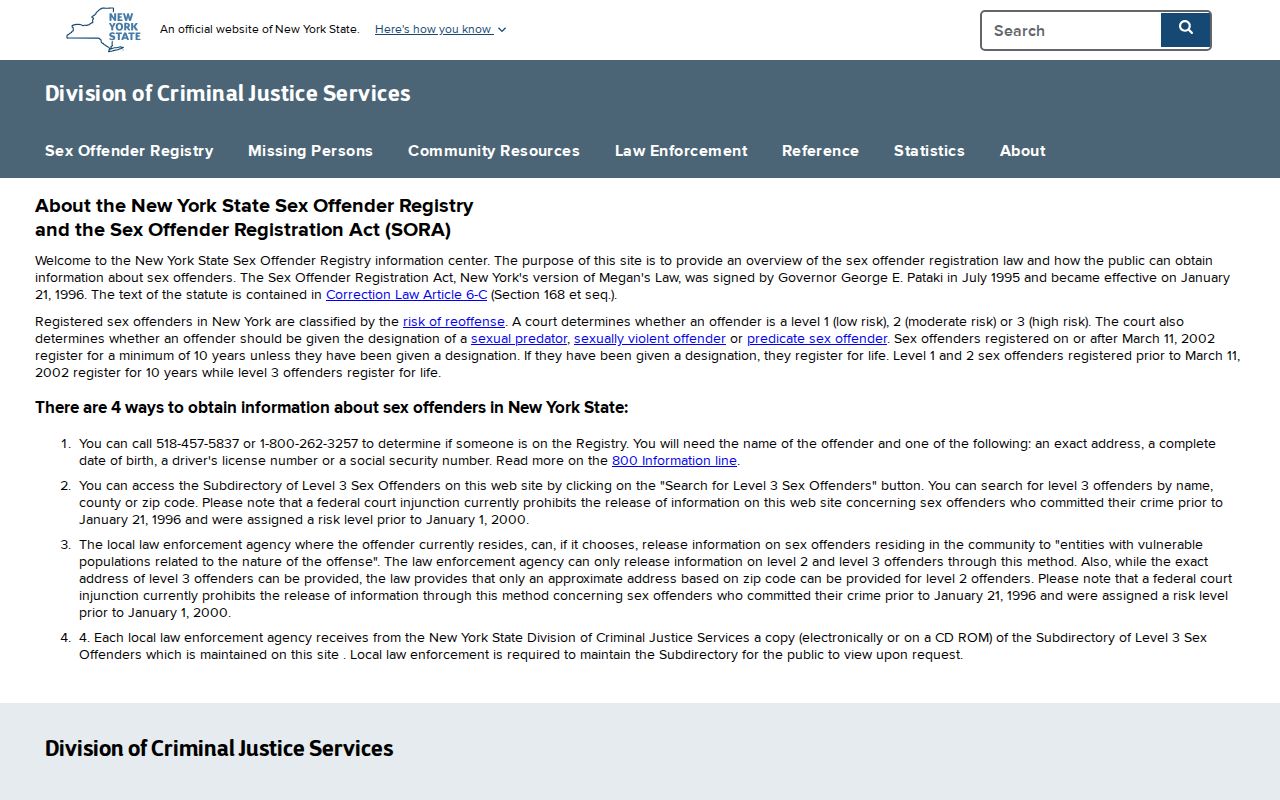
Those dates and designations explain why two Orange County profiles at the same level may not share the same registration end point.
Orange County Registry Map Limits
A dot or address on an Orange County registry result does not prove that one statewide distance rule applies. New York has no single general residency-radius limit for every registrant. A court order, parole or probation condition, a law aimed at a specific circumstance, or a valid local rule may set restrictions for one person. The public map alone does not reveal that full legal framework.
For community awareness, focus on what the profile actually states. Do not draw a radius around a listed address and label it unlawful. If a specific compliance concern remains, give the Orange County Sheriff the facts and let the proper agency review registration duties. That route avoids turning a map estimate into an unsupported accusation.
Note: New York risk levels describe assessed risk and public notice; they are not the same as federal SORNA tiers or map-distance rules.
Orange County Registry Compliance Reports
When a public profile appears to show an old address or another concrete compliance problem, record the profile details and contact the Orange County Sheriff at 845-862-6399. Give staff the name shown, the fact that raised concern, and the date the official profile was checked. The sheriff can route a local registration question to the right unit. DCJS registry staff can address a state-record question at 518-417-3384 during published weekday hours.
Do not visit the listed address or confront anyone. A delayed update, a lawful address format, or a supervision fact not displayed to the public may explain what looks wrong. Law enforcement can compare the report with nonpublic verification records. Use 911 only for an active emergency; routine questions belong on the sheriff or DCJS contact channels.
Lawful Use and Community Notification
Orange County registry information supports personal, family, and community safety planning. It can help a resident recognize a public profile, monitor a documented move, and pass a specific compliance concern to law enforcement. It does not authorize threats, injury, harassment, or vigilantism. A listing is a legal registration classification, and the stated facts must not be stretched beyond what DCJS releases.
The official text of New York's registry law sets the rules that govern release and use of this information.
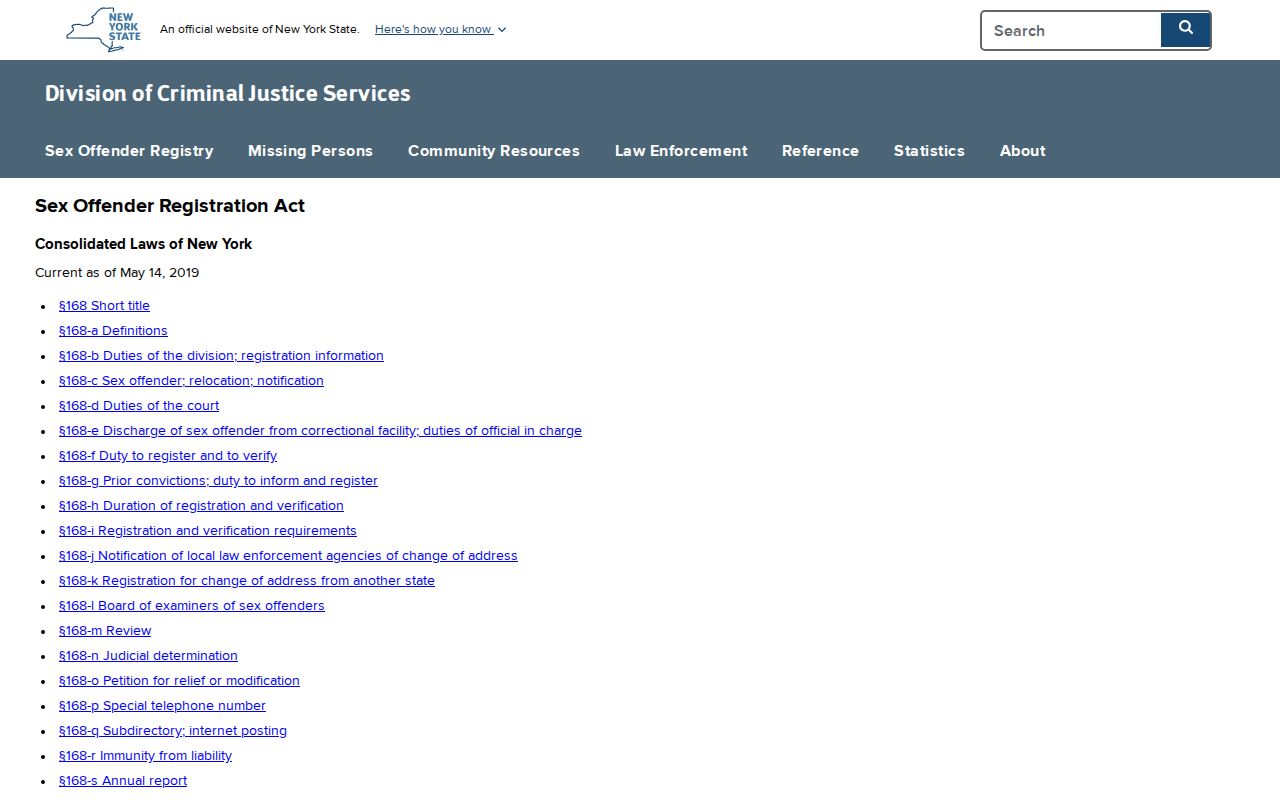
The statute is the proper source when a question turns on disclosure, registration duties, or the limits placed on a registry user.
Misuse is prohibited: Injuring, harassing, or committing a crime against a registrant or family through registry information can lead to criminal or civil consequences under Correction Law §168-q.